
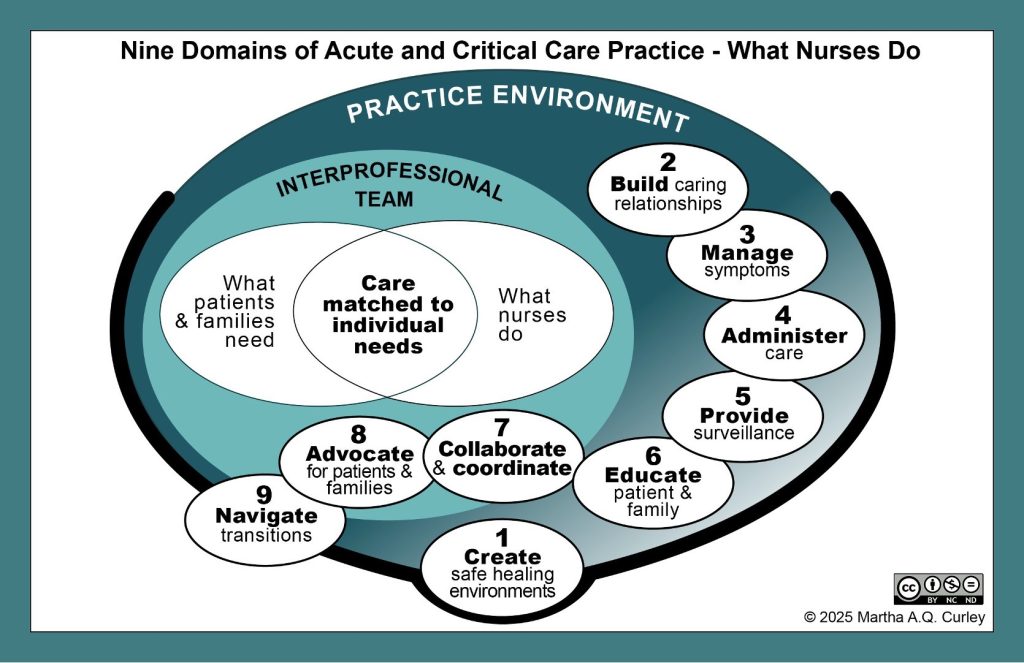
Create safe healing environments: This domain focuses on what nurses do to intentionally create care settings that integrate a safe space with authentic presence to support the patient and family’s capacity to heal in body, mind, and spirit. Nurses shape the physical environment to promote rest, comfort, and well-being, thereby preventing harm and promoting safe practices during hospitalization.
Build caring relationships with patients and families: This domain focuses on the intentional engagement of nurses in patient and family relationships that facilitate their health, recovery, and well-being. These relationships are rooted in nurse knowing patients and families as individuals, honoring their values, preferences, and inherent dignity. Caring relationships are enacted through the nurse’s presence, compassion, and empathy.
Assess and manage patient symptoms: This domain encompasses the nurse’s role in symptom management with the goal of minimizing patient distress, providing comfort, and alleviating suffering. This requires vigilant assessment, integrated targeted interventions with continuous re-evaluation of the individual patient’s dynamic response.
Administer physical, therapeutic, preventative, and end-of-life care: This domain includes the direct physical care that nurses provide and manage, including personal hygiene, nutrition, hydration, toileting, sleep, and mobility. This domain includes leading goal-directed therapeutic and preventative interventions and managing life-sustaining therapies, both routine and complex, tailored to individual patient needs and dynamic response. Furthermore, this domain includes the provision of end-of-life care for patients and their families.
Provide surveillance, vigilant of patient risks, and are ready to intervene: This domain includes the purposeful ongoing monitoring and synthesis of complex patient data from multiple sources, including technology, nurse assessment, and patient communication. This dynamic, iterative process throughout a patient’s course of illness enables nurses to detect subtle changes in a patient’s condition and intervene promptly to prevent or mitigate clinical deterioration. Nursing surveillance is demonstrated through the nurse’s vigilance, pattern recognition, effective communication, anticipation of potential problems, decision making, and timely interventions.
Teach patients and families what they need to know to actively participate in their own care and decision-making and manage their own care after hospital discharge: This domain emphasizes the crucial role of nurses in patient teaching providing the knowledge and associated skills required by individual patients and/or family members to help them understand their illness and actively engage in their own care and decision making as desired and capable. The overall goal of patient teaching is to enable self-care that supports optimal health outcomes.
Collaborate with and coordinate care within the interprofessional team: This domain acknowledges how nurses work with patients, families, and other healthcare professionals to promote and encourage each person’s contributions, ensuring person-centered, coordinated care. Nurses are instrumental in facilitating communication within the team, negotiating perspectives, monitoring quality, and managing breakdowns. They also demonstrate clinical leadership by initiating interprofessional team meetings in the patient’s and family’s best interests.
Advocate for the patient and family, ensuring that their needs and preferences are known and respected within the interprofessional care team: This domain highlights the nurse’s deliberate action to know the patient’s and family’s values, preserve their autonomy, resolve ethical and clinical concerns, and ensure the care is congruent within the interprofessional team.
Navigate patient transitions in care across and out of the healthcare system: This domain focuses on the nurse’s responsibility in coordinating the safe movement of patients between care acuity levels and hospital systems. This coordination is vital for continuity in care and promoting recovery and reducing preventable complications, readmissions, and healthcare costs. It involves skilled communication, care coordination, and system thinking, helping patients and families navigate their transition and assume post-discharge care and or receive appropriate care from a new team.